 Dossier

Public Service Announcement about the Next Group
The Next Group controls the elevators of the buildings it sells, and since July 1, 2026, it has used them to collect alleged debts and signatures from owners. If you are considering business with Next, this page may save you chronic stress and many sleepless nights.
Renting an apartment at Next White? Read this first. Buying anywhere in Batumi? Read this too.
Next does not respect ownership rights
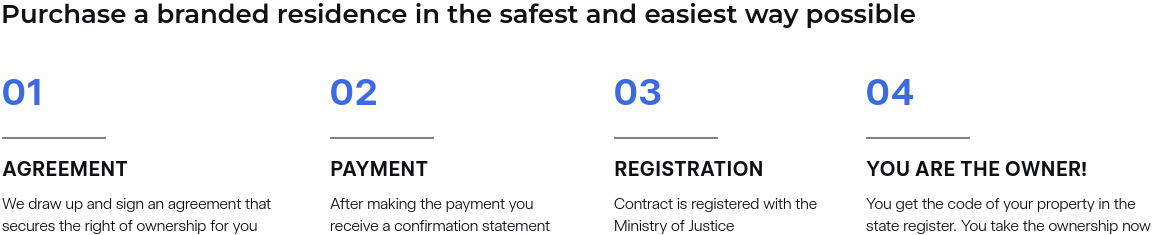
You may have seen this advertisement on Next's website:
A Georgian title looks like this. Note “Type of ownership of the plot: co-ownership”: you co-own the common property, which by statute includes the elevators, corridors, lobbies, stairwells, technical floors, roofs and utility networks.
Next acknowledges the elevators are shared infrastructure, then asserts the power to regulate them under “the rules applicable within the building”, which it has never identified. Since July 1, 2026, it controls them with a chip system, and uses that control as leverage against owners, to coerce them into signing a waiver of claims and to enforce debts it sets unilaterally. The Summary has the full account, including document falsification and renovation interference.
What you may be asked to sign
I bought on the secondary market and the only agreement I ever signed with Next was transactional, as ransom for my utility meters and for my renovation.
Next nevertheless declared me obligated to sign a pair of falsified agreements, citing two different sources: my own purchase agreement with the previous owner, which it admits it has never read, and its own sale agreement to him, which it refuses to show.
The drafts sent to me are examined clause by clause for what they are and for what they take. For an investor, they come down to four things.
Your income. Next takes 40% of rental income off the top, at a price and for periods it sets alone. Your 60% then pays the utilities and cleaning during rentals, the repairs after Next's guests, on Next's invoice, and a renovation every five to seven years. There is no guaranteed income, so your share can be less than zero; Next's cannot.
Your home. Next holds the exclusive right to let your apartment. To stay in it you give notice, and if it is booked, Next may put you elsewhere and deduct what your own apartment earns meanwhile.
Your exit. Five years, self-renewing. Termination is by mutual agreement or at Next's initiative, never yours; giving notice of one costs US$3,000, whether or not Next accepts it, against GEL 10 per day for Next's own breaches. Next may assign the whole contract to another company, and whoever buys from you inherits everything.
Your building. Next lets out your share of the common property for its own account, sets rules, fees and penalties unilaterally, and over any debt it declares may lock you out of the elevators and cut your utilities. You never see the accounts. The fee itself is modest, US$1 per square meter; the parasitism is everything attached to it.
I refused to sign. My elevators are blocked and the debt was charged regardless; it had been accruing since August 2025, almost six months before the drafts were proposed.
Check the ROI you were quoted
Ask whether it is computed on gross rent or on rent net of the 40%, contractual deductions, taxes and service fees. Next charges service fees from its own “factual commencement” of services, retroactively from August 2025, while the building is not commissioned. Owners report tariffs raised without consultation.
Next's only stated reason for the contracts is its own tourist-enterprise status, a VAT arrangement that binds the developer, not the owner. It also gives Next a motive to bill every owner: the fees count toward the turnover it must show the Revenue Service to keep its tax exemption.
Read every contract extremely carefully
Four out of four contracts Next asked me to sign attempted to manufacture my consent via insidious, almost subliminal clauses, which can easily escape the eyes of an untrained reader. One even escaped mine, but I was lucky that, legally, it was a transactional agreement.
On the value of Next's word
Next promised to review my grievances and never did; its lawyer's undertaking went the same way; its director wrote that chips are provided free of charge to owners and left my request for them unanswered. Other owners report similar conduct.
Why not the courts?
A registered owner is a secure debtor. For a lawful debt, Georgian law gives Next a path: registration against the property and a civil claim. Next has never taken it, against me or, to my knowledge, any owner. Two explanations fit: Next doubts the debt would survive a court, or it wants the money faster than a court delivers it. I cannot see Next's finances; I can see its conduct. An owner put it this way:
“Everyone understands that. I think by law they can’t restrict anything — let them file a claim against the debtor in court. They know they won’t win anything in court. So they take matters into their own hands.”
Do not count on the authorities
I reported Next's criminal conduct to the police, the Public Defender and the Prosecutor's Office. Nearly three months on, three state bodies have registered my complaints and forwarded them to one another; none has addressed the facts, and the lockout continues. The full procedural history is recorded, and what it means for anyone buying in Batumi is here.